





Trend 1 | From “Feature Stacking” to” Wear Experience”
For years, functional fabrics have been largely understood through specifications, such as the waterproof–breathability rating, the rate of moisture wicking, or the level of UV protection. At one point, these numbers were widely assumed to translate directly into consumer acceptance.
In recent years, however, market feedback has consistently pointed to a different reality—consumers are increasingly making their final judgment based on how a garment actually feels when worn. Because what consumers truly experience is not test data, but repeated moments of movement, pause, activity, and perspiration, the body’s response while wearing a garment often becomes the most direct—and most honest—form of feedback.
That experience, in turn, strongly influences whether consumers return to the same brand. As a result, consumer priorities are changing. Beyond how impressive the numbers on a hangtag appear, they are asking:
-
During uphill and downhill hiking, paddling, or long hours of marine activity, does the fabric move naturally with the body, or does it slow movement down?
-
When sweat and moisture repeatedly build up, does the garment return to a dry, comfortable state—or does discomfort linger?
-
Across continuous transitions between movement and stillness, does the garment interfere with motion, causing constant readjustment?
Over repeated use, these subtle wear sensations accumulate, informing consumer perceptions of product reliability and brand trust. As a result, the value of functional fabrics is no longer defined by specifications alone, but by wear experience itself.
Trend 2 | Athleisure Enters All-Day, All-Weather Use
Athleisure has evolved beyond a style trend into a fundamental lifestyle shift. By 2026, functional apparel is expected to perform not only in active moments but throughout daily wear.
-
Walking, commuting, moving, and cycling through the rhythm of the city
-
Work, interaction, and brief stops across both formal and casual environments
-
Low-intensity activity combined with the need for all-day comfort
Accordingly, Athleisure material strategies in 2026 are evolving toward lightweight, all-weather adaptability, ensuring stable wear comfort across urban exposure, unexpected rain, and post-exercise moisture transitions.
Trend 3 | Creating a Shared “Slower Pace” Through Outdoor Experiences
WGSN (Worth Global Style Network) forecasts the emergence of the “Great Exhaustion” in 2026—a condition defined by collective fatigue, pressure, and burnout in response to the pace and demands of the current era.
According to Napoli, this shift will lead consumers to prioritize conserving time and energy at all costs. Within this movement, “slowness” becomes a radical lifestyle choice—one that is gentler, more intentional, and more closely aligned with natural rhythms.
As “digital detox” becomes an increasingly discussed trend, the role of brands is shifting—from simply delivering information to actively helping consumers disconnect and return to real, lived experiences. In this context, outdoor brands may experiment with slower-paced, intensity-controlled activities that allow consumers to naturally enter a moment free from interruption, such as:
-
Light hiking and suburban walking routes
-
Kayak or SUP activities that emphasize rhythm rather than speed
-
Sunrise or sunset jogging and walking experiences
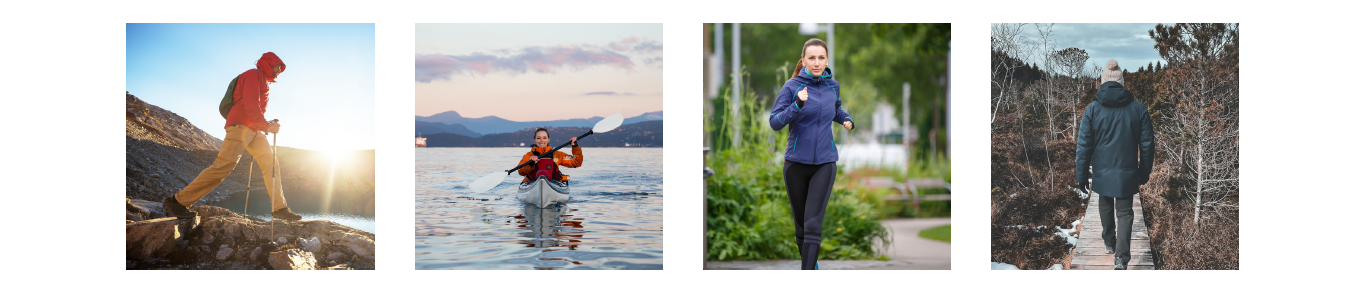
The common thread among these activities is not results, but a renewed awareness of breathing, bodily rhythm, and changes in the surrounding environment. In these moments, consumers can intuitively feel the stability, comfort, and all-weather adaptability of functional apparel—allowing the product to become part of the experience rather than the focus of overt promotion.
Conclusion | What Makes Functional Apparel Competitive in 2026?
Taken together, these trends suggest that, in 2026, truly competitive performance apparel will not be defined by how comprehensive its features are, but by whether it delivers clear, perceptible value across real wear and shifting use scenarios.
When a fabric helps a product clearly communicate who it is made for and the contexts in which it truly performs, it becomes more than a material option—it becomes an integral part of a brand's product strategy.
This is why Hwafune consistently begins material development and selection by returning to real wear scenarios. We welcome you to connect with our professional team to explore functional fabric solutions tailored to your brand and your users. contact us