



Performance membranes are advancing to deliver multi-functionality without compromising quality. HwaFune explores its newly launched Porlite® Flex technology and what’s next for membrane innovation.
In September 2026, Taiwanese functional fabric specialist HwaFune launched Porlite® Flex, a polypropylene (PP) membrane-based outdoor wear fabric. Alongside the waterproofing, breathability, and wind resistance of previous Porlite® versions, Flex boasts stretchability – a notable achievement for PP membranes, which are inherently nonelastic. The result – freedom of movement, weather protection and material simplicity together in one membrane.
Overcoming technical limitations
Performance sector analysts emphasise that consumers demand multi-functionality – waterproofing, breathability, stretch, comfort, durability and environmental considerations, even if those requirements generate friction against one another within research & development (R&D).
HwaFune’s flagship hydrophobic membrane technology, Porlite®, was shaped not only by this tension but also by a desire to reduce the environmental footprint of functional fabrics.
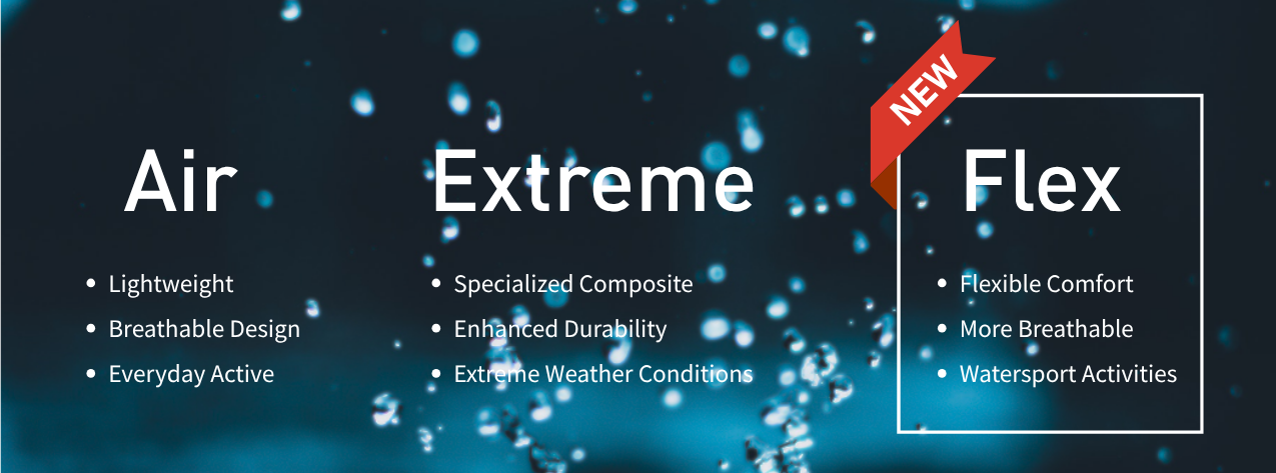
Porlite® first hit the market as Air, a PFAS-free, non-toxic, highly breathable alternative to traditional PTFE membranes. It later evolved into Porlite® Extreme, which emphasized durability, raising the series’ abrasion resistance and breathability to levels capable of withstanding extreme environments. The latest generation, Porlite® Flex, addresses a key limitation in today’s market: stretch.
Engineering elasticity
HwaFune’s customers valued Porlite®’s functional performance but identified a constraint in accommodating closer-fitting garment designs.
As PP is inherently non-elastic, introducing stretch without compromising the membrane’s characteristics required changes to both its formulation and structure, and R&D took three years.
It was not enough for the membrane to merely stretch, since elasticity and recovery traditionally pull in opposing directions. By upgrading the formulation and reengineering part of the membrane structure, HwaFune significantly improved the recovery rate over the previous two generations, minimising garment deformation.
Improving vapour transmission
Porlite® Flex also updates its hydrophobic technology. A longstanding challenge in waterproof-breathable textiles, HwaFune says, is improving moisture vapour transmission without compromising protection from liquid water. Increasing the size or number of pores helps moisture escape but also allows water to penetrate.
HwaFune altered “both the number and size of its pores”. More pores create additional routes for moisture vapour to escape, while smaller pores make it more difficult for liquid water to pass through. Porosity increased from 55% to 70%, while pore size decreased by almost half, positioning the membrane at a 30K/30K waterproof and moisture permeability performance level.
A simple and pure structure
Porlite® Flex enters a competitive market for hydrophobic membrane technologies, including expanded polyethylene (ePE). The company says ePE can typically require additional PU lamination to maintain hydrostatic head, potentially introducing trade-offs in weight and end-of-life recyclability.
Porlite®’s PP membrane instead boasts a ‘relatively simple and pure structure’ without ‘extensive additional materials’, delivering performance comparable to – and in some respects exceeding – ePE. Material simplicity is increasingly relevant as brands and manufacturers consider how different components affect the eventual management of technical apparel.
Ad.by TITA published Sep. 15, 2026
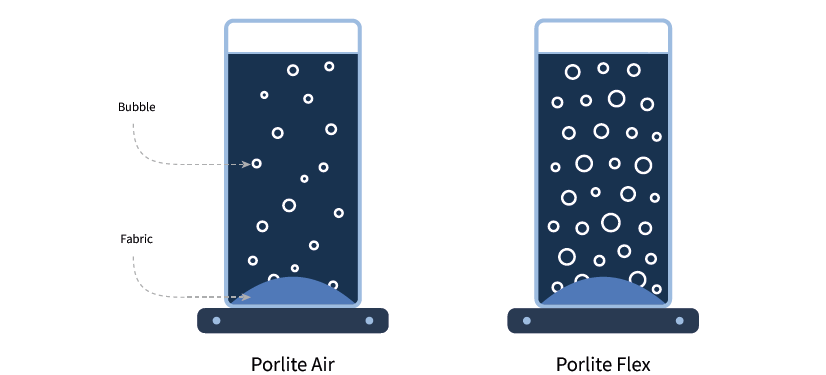
“When air is pumped in from below, the fabric bulges upward under pressure. Air escapes through the membrane’s micropores as bubbles, while the water above cannot pass through. More bubbles indicate higher air permeability."