





What Is PFAS-Free?
PFAS-free means a textile, membrane, or DWR (Durable Water Repellent) finish is manufactured without intentionally added per- and polyfluoroalkyl substances — the class of "forever chemicals" long relied on for their water- and oil-repellent properties. Historically, PFAS-free alternatives have faced performance trade-offs, but this gap has been narrowing as the technology matures.
PFAS do not break down under normal environmental conditions; they accumulate in soil, water systems, and living organisms over time. Health authorities and researchers have linked PFAS exposure to a range of concerns, including thyroid disruption, reproductive and developmental effects, and certain cancers.
The Claim vs. The Data
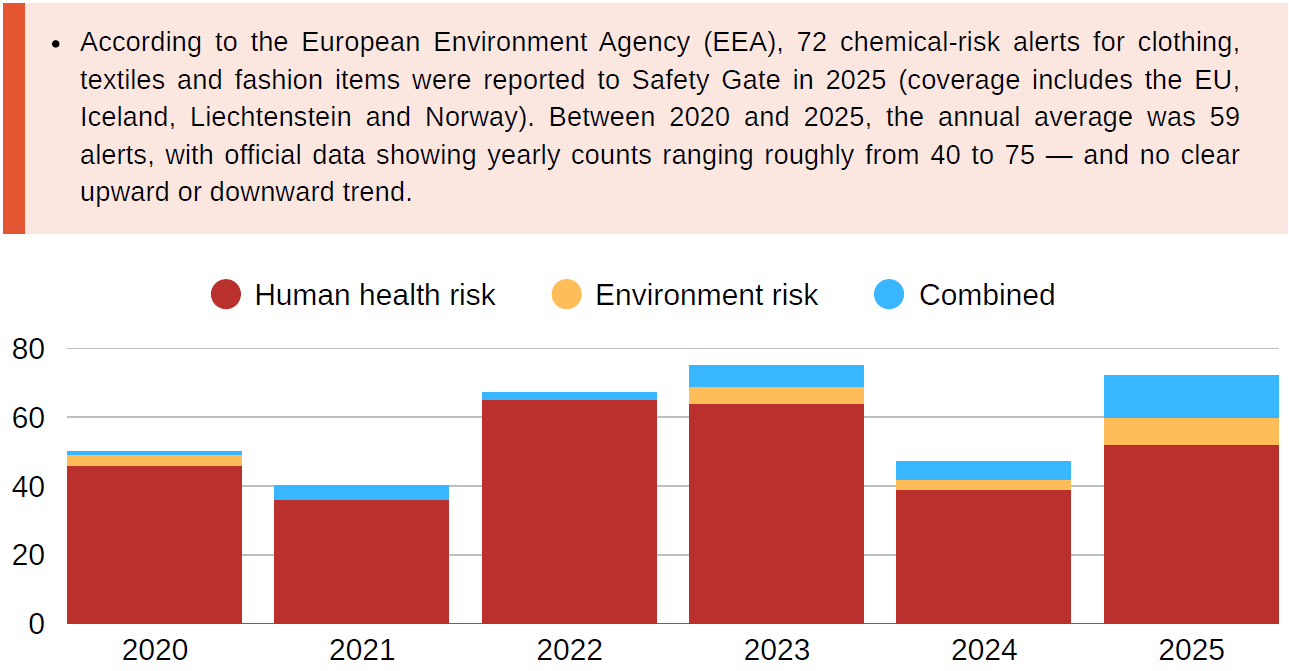
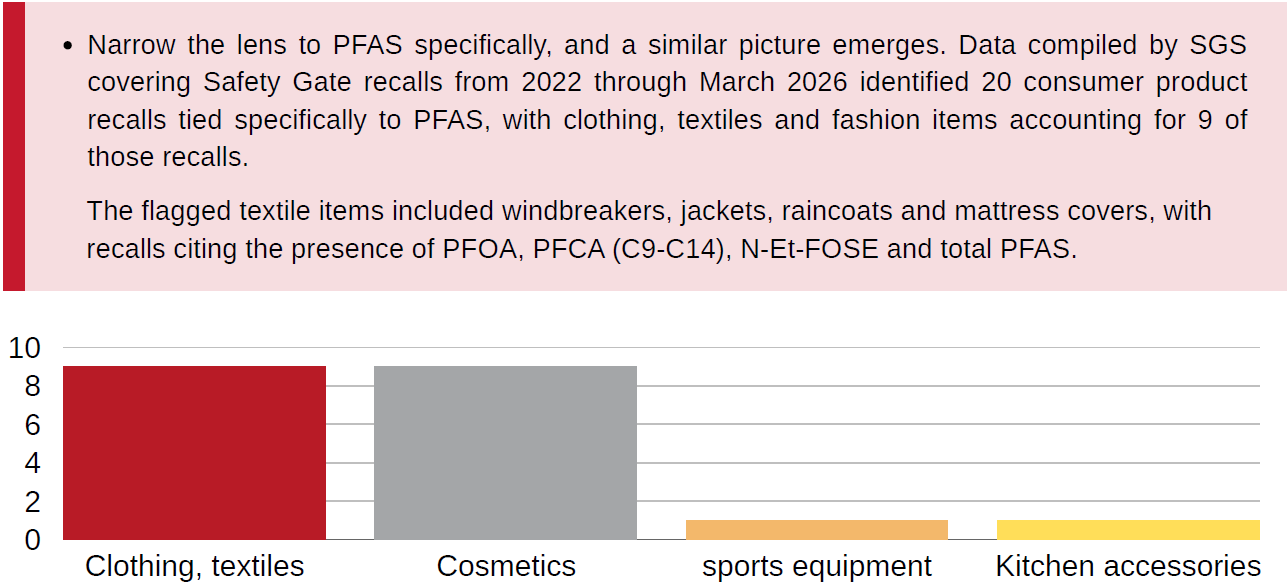
Yet even as brands talk about "chemical safety" and "PFAS-free" more than ever, the regulatory alert data tell a different story.
What Is The "Safety Gate" In These Reports?
Safety Gate, the EU Rapid Alert System for Dangerous Non-Food Products, is a notification platform jointly operated by the European Commission and national market surveillance authorities across the European Economic Area (EEA).
When an enforcement authority in one member state identifies chemical non-compliance in a product on the market, that information is shared in near real time with authorities in other member states, allowing non-compliant goods to be withdrawn, recalled, or restricted more quickly.
For outdoor apparel brands, this means the old logic of "test in one market, sell in one market" no longer holds: once a given style is flagged in a single member state, it can quickly draw scrutiny across the wider EU market.
What Textile Supply Chains Can Do Now
Facing this timeline, sourcing and sustainability teams typically move on three fronts:
1. Establish a baseline. Require existing suppliers to provide third-party total organic fluorine (TOF) test reports to establish where things currently stand.
2. Verify performance, not just claims. Evaluate PFAS-free membrane and DWR alternatives against documented performance data, including breathability, waterproof rating, and durability after repeated laundering, rather than relying on "PFAS-free" as a marketing claim alone.
3. Map compliance timelines across the markets where a given style is sold, so a single production batch does not end up compliant in one market while already non-compliant in another.