




- Home
- News
- Resilient Supply Chains as the New Standard: A Structural Upgrade Is Underway in the Textile Industry
I. Supply Chain Evaluation Is Being Redefined
Across recent industry practice, the way textile supply chains are evaluated has shifted noticeably. What used to be treated as secondary considerations—stability and adjustability—is now being elevated into core criteria for supply chain design and partnership decisions.
Under this shift, “being able to hold up” is no longer something assessed after the fact. It is increasingly becoming a baseline requirement built into supply chain planning and configuration from the start.
II. What Does a Truly Resilient Textile Supply Chain Look Like?
Resilience is not simply about holding more inventory or adding more production sites. True resilience comes from whether the supply structure itself provides sufficient room for adjustment and the flexibility to respond. In practice, this is typically reflected in a few key dimensions:
Whether critical materials have viable alternatives
In many cases, production risk does not stem from technical feasibility, but from overreliance on a single-source supplier. When that source encounters lead-time slippage, capacity limitations, or regulatory constraints, disruption can quickly propagate across the production line.
Resilient supply structures anticipate this risk early by incorporating viable alternatives, allowing operations to proceed even when adjustments to specifications are required.
Whether Production Nodes Can Flexibly Switch and Absorb Capacity
In day-to-day operations, the greatest risk is not that a single facility encounters an issue, but that when an issue arises, there is nowhere for the work to be absorbed. If a dyeing or finishing stage becomes temporarily constrained, the ability to smoothly transfer orders to alternative partner facilities often determines whether lead times can still be met.
Truly flexible supply chains typically validate these switching mechanisms in advance, rather than scrambling to identify backup options only after a disruption occurs.
Whether information is transparent enough to support timely decisions
Often, the issue is not the speed at which problems emerge, but the delay in recognizing them. Without timely visibility into material delays, capacity constraints, or shipping disruptions, production plans continue on outdated assumptions—resulting in compounded failures. Transparency enables course correction early, before disruptions translate into missed delivery commitments.
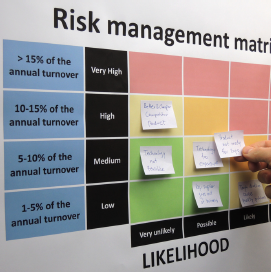
III. Three Structural Shifts Underway in the Industry


IV. Hwafune's Perspective
Hwafune believes that truly long-term and stable partnerships are built on a shared understanding of supply risk—and a willingness to shoulder it together. In material selection and supply planning, it is no longer sufficient to optimize for short-term efficiency or a single metric. Performance and market needs must be considered alongside structural stability and long-term feasibility.
At Hwafune, we also apply strict upstream partner selection and ongoing monitoring to safeguard material integrity and compliance—helping brands reduce uncertainty from the source.